Two posters can share the same size, the same finish, and the same artwork and still feel completely different in the hand. One is limp and curls off the wall; the other sits flat and reads as something worth keeping. The difference is almost always the paper stock underneath the ink. Finish gets most of the attention, but the substrate, its weight, its coating, and whether it is paper at all, is what decides how a poster behaves once it leaves the print shop.
This is a look at what those stocks actually are, what the numbers on a spec sheet mean, and how to match a material to where the poster will live.
What gsm really tells you
Nearly every poster stock is described by a gsm figure, short for grams per square meter. It is a weight measurement, not a thickness measurement, and that distinction trips up a lot of buyers. A heavily coated 200 gsm sheet can feel thinner than a bulky 170 gsm uncoated one even though it weighs more. As a working rule, though, heavier paper does tend to be thicker, stiffer, and more opaque, so gsm remains the single most useful number for predicting how substantial a poster will feel.
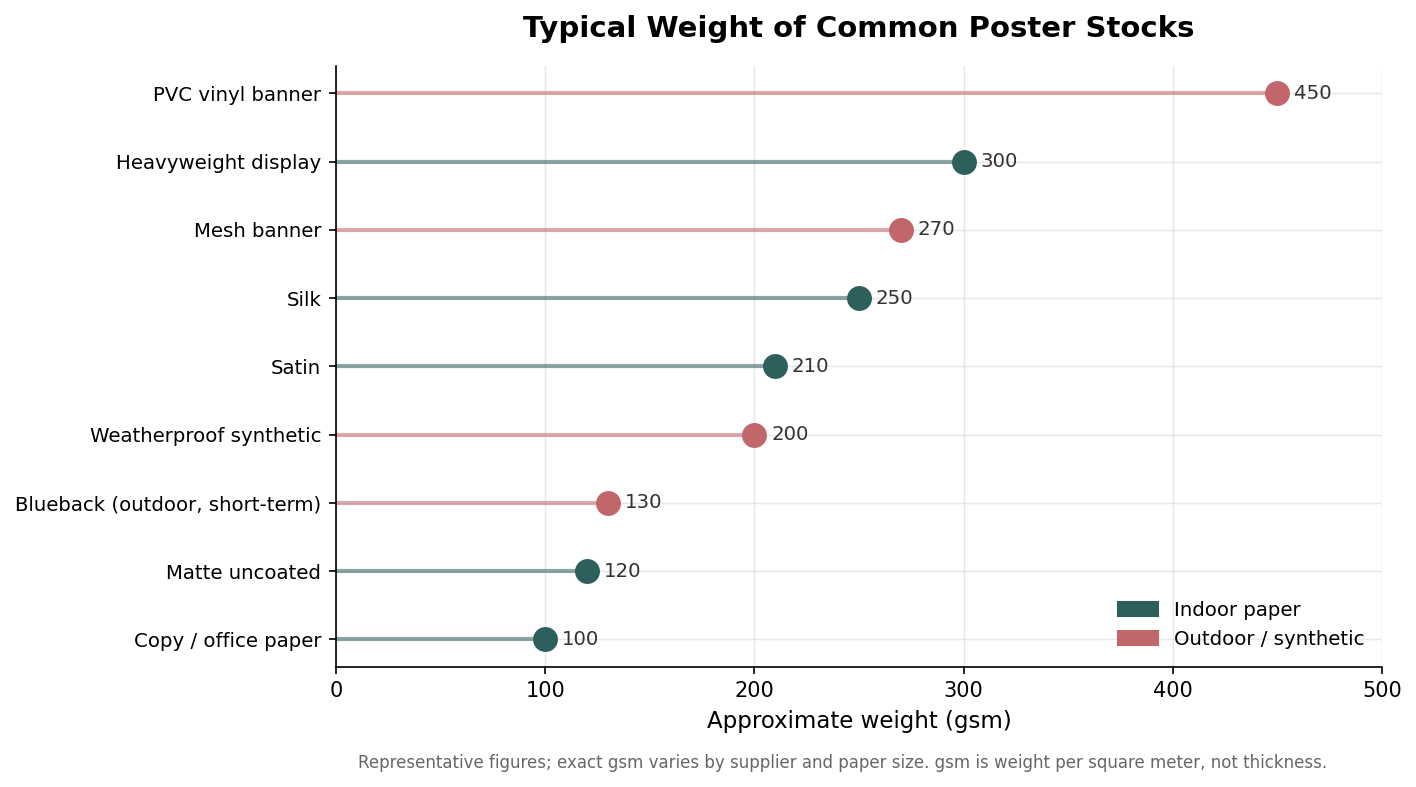
The ranges sort out cleanly. Anything from roughly 90 to 120 gsm is office and copy-paper territory, too flimsy for a real poster and prone to curling and show-through. The 120 to 170 gsm band is the budget zone, fine for short-lived flyers and event handouts but not for anything you want to hang. The sweet spot for genuine wall posters is 200 to 300 gsm: thick enough to lie flat, stiff enough to resist dog-earing, and opaque enough that nothing behind it bleeds through. Push past 300 gsm and you approach card stock, which looks premium but can be harder to roll into a tube and more expensive to ship.
The indoor paper stocks, and what each is good at
Among indoor papers, the choice is really about surface and weight together. Matte or uncoated stock, often around 120 gsm in its lighter forms, has a clean, non-reflective face that is ideal for text-heavy designs, gallery walls, and any setting with a lot of overhead light, because it kills glare. Satin stock, commonly 190 to 235 gsm, adds a soft sheen that deepens color and contrast without the mirror effect of gloss, which makes it a safe default for larger displays. Silk, typically around 250 gsm, sits at the higher end: smooth, low-sheen, and heavy enough to feel professional, it is a strong pick when the poster is the centerpiece rather than a temporary notice.
The pattern to notice is that surface and weight usually climb together. Premium stocks are both smoother and heavier, while the lightest options are also the plainest. That is why picking a weight often settles the finish question at the same time, and why a 250 gsm silk almost always outclasses a 120 gsm matte for a design meant to last.
Two properties are worth checking beyond the headline weight. The first is opacity: a thin, bright design printed on light stock can let wall color or a second image show faintly through, which is why heavier sheets read as cleaner even before you touch them. The second is how the stock rolls. Papers in the 200 to 300 gsm range curl into a shipping tube and relax flat again without complaint, but once you cross into the 350-plus card weights, tight rolling can crack a coated surface, so those are better shipped flat on a board. If you are ordering a large run destined for tubes, that alone can be a reason to stay under about 300 gsm.
When the poster goes outside, paper is not enough
Standard paper, however heavy, is not built for weather. Outdoor use calls for either a treated paper or a synthetic material, and the specs shift accordingly. Blueback poster paper, around 130 gsm with a blue reverse coating that stops show-through, is the classic choice for short-term billboard and pasted campaigns; it is inexpensive and meant to be replaced. For anything that must survive rain and sun for longer, a weatherproof synthetic at roughly 200 gsm is tearproof, waterproof, and fade-resistant. In windy spots, mesh at about 270 gsm has a perforated face that lets air pass through instead of turning the poster into a sail. And for the most demanding, long-exposure installations, a full PVC vinyl banner near 450 gsm is heavy, hardwearing, and UV-resistant, though at that point you have really left poster territory for signage.
Matching the stock to the job
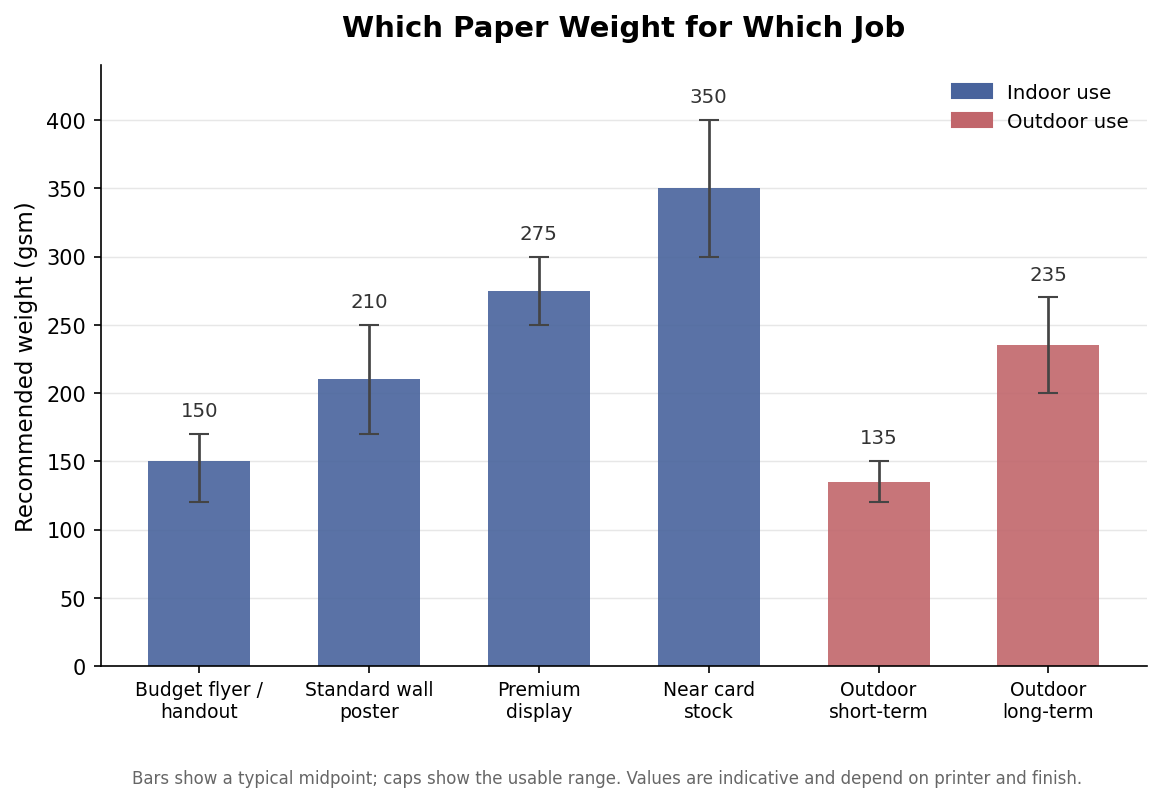
The cleanest way to choose is to start from where the poster will hang and how long it needs to last, then let that point you to a weight. For a throwaway flyer or an event handout, 120 to 170 gsm keeps costs down and no one will fault it. For a standard indoor wall poster you actually want to look good, aim for 170 to 250 gsm. For a premium display piece, step up to 250 to 300 gsm, and reserve the 300-to-400 gsm heavyweights for pieces where the tactile feel is part of the point. Outdoors, drop paper entirely: a synthetic weatherproof stock for anything staying up more than a few weeks, blueback for short campaigns you plan to replace.
None of these figures are absolutes, and different suppliers cut their stocks at slightly different weights, which is why the ranges above are given as bands rather than single numbers. But if you specify the use case and a target gsm when you order, you hand the printer the two variables that matter most, and you sharply cut the odds of a poster that looks right on screen and disappoints in person.